

A while back I wrote about my payday routine, how I get money into my accounts. This is the sequel: what happens once it's in there.
Recently I did something a little nerdy. I exported every transaction across my accounts for the last year and a half and just read them. Every buy, every dividend, every sell. I wanted to see what I actually did, not what I remember doing.
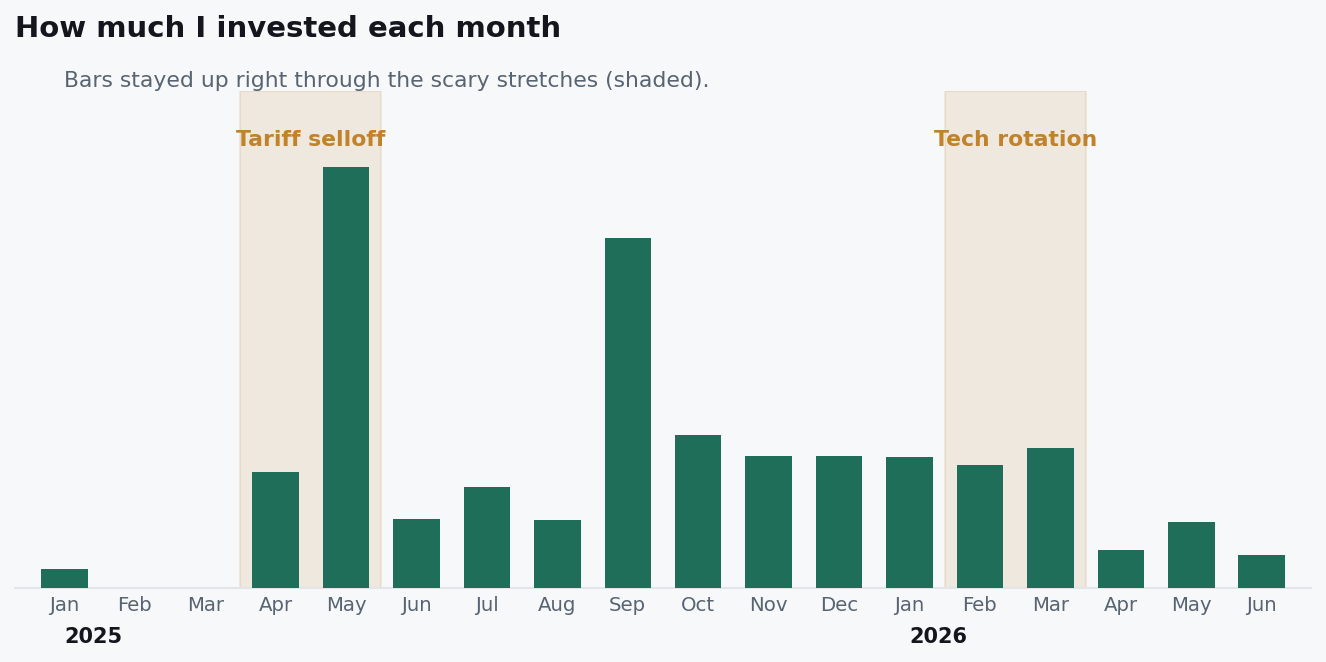
The timing made it interesting. That stretch covered a brutal tariff-driven selloff and, later, a choppy rotation out of the big tech names. Two real tests, back to back. And here's the honest takeaway: none of the stuff that worked was clever. The wins were boring, and most of them were on autopilot.
Lesson 1: Time in the Market Beat Everything
The single biggest thing I did right was nothing. I stayed in.
I didn't sit in cash "waiting for clarity." I kept buying on my schedule, the same way I always do. The people who got hurt weren't the ones who were invested. They were the ones who got out and then had to guess when to get back in.
You cannot miss the recovery if you never leave. That's the strategy.
Lesson 2: Deploy Fast, Then Forget About It
When money lands in my account, it does not sit there. The gap between "money arrives" and "money is working" was usually a day or two.
That matters more than people think. Cash sitting in your brokerage isn't safe, it's idle. And the longer it sits, the more your brain starts whispering "maybe wait for a better entry." That whisper is how people hold cash for six months and miss the run.
My rule is dumb and effective:
- Money comes in.
- Money goes to its target.
- I close the app.
The decision was already made on payday. Execution is just paperwork.
Lesson 3: Let the Dividends Snowball
This is the laziest win of all, and I love it for that.
Every dividend my holdings pay gets automatically reinvested. I don't touch it. The cash shows up and quietly buys more of the same thing. On their own these reinvestments look like nothing. Stacked up over time, they're a staircase.
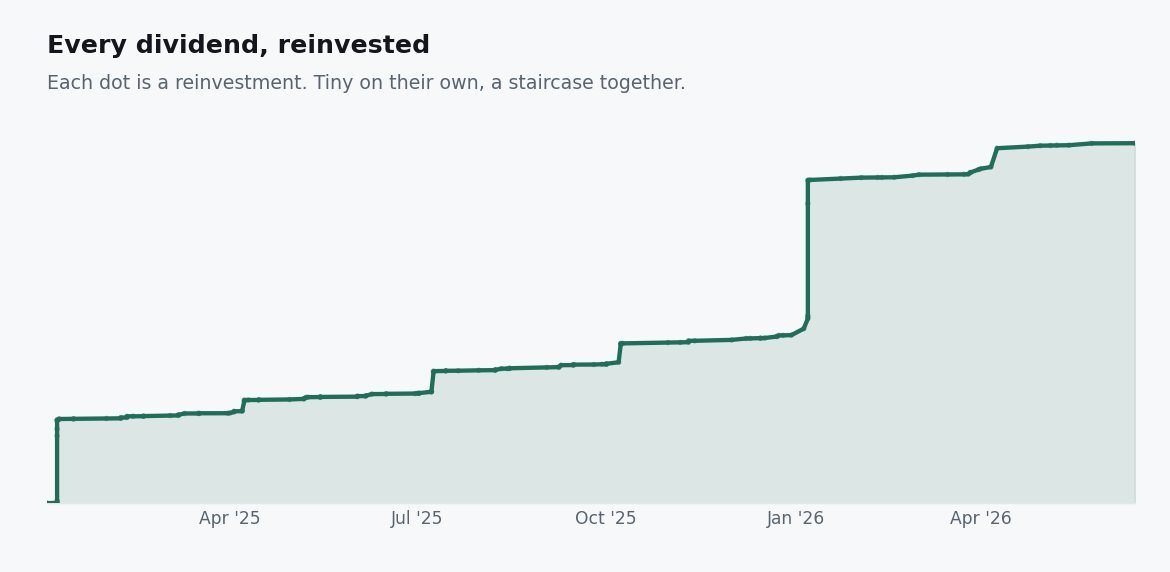
If you take one thing from this post: go check if dividend reinvestment is turned on. It's usually one toggle, often called DRIP. Flip it and forget it.
Lesson 4: When the Market Broke, I Did Nothing (On Purpose)
When the tariff selloff hit, everything was red and the headlines were ugly. My lizard brain said sell and protect yourself.
I didn't. The record shows I kept buying right through it, and by pure luck near the bottom. I'm not going to pretend I timed that. I just kept doing the boring thing on schedule, and the boring thing happened to land at a great moment.
The real point: I made zero fear-based sells. Not in the crash, not in the rotation. A drawdown isn't a signal to do something. For a long-term investor it's a test of whether you'll sit still.
The market doesn't reward the smartest investor in the room. It rewards the one who can sit on their hands when it's hard.
Lesson 5: Rebalancing Is Not the Same as Panicking
Now, I did sell some things in that window, so let me be clear about the difference.
Fear selling and deliberate rebalancing look identical on a statement. They're opposites in real life. Over this stretch I've been slowly cleaning house: trimming a scattered pile of individual stocks I'd collected over the years and consolidating into a few broad funds I actually believe in.
Three things separate a good sell from a panic:
- The reason isn't the price. "I want fewer single stocks" is a reason. "It's going down" is not.
- It was planned before the red day. If a headline triggered it, that's usually fear in a costume.
- It makes your portfolio simpler, not more reactive.
Fewer holdings, fewer decisions, less for my emotions to grab onto when things get loud.
The Habits Did the Work
I didn't out-analyze the market. I didn't predict the crash or call the bottom. I just had a few boring habits running quietly in the background: stay invested, deploy fast, reinvest dividends, don't flinch, rebalance with intent. Those habits carried me through two events that wrecked a lot of people's nerves.
That's the secret nobody wants to hear, because it doesn't sound impressive. The best thing you can do for your money is build a routine so dull and automatic that a scary market can't talk you out of it.
Don't let your money just happen to you, and don't let the market happen to you either. Decide your behavior in advance, automate what you can, then have the discipline to be boring.
Future you will be very, very grateful.